

By LEAD — AI Training Academy · Updated 7 July 2026 · 8 min read
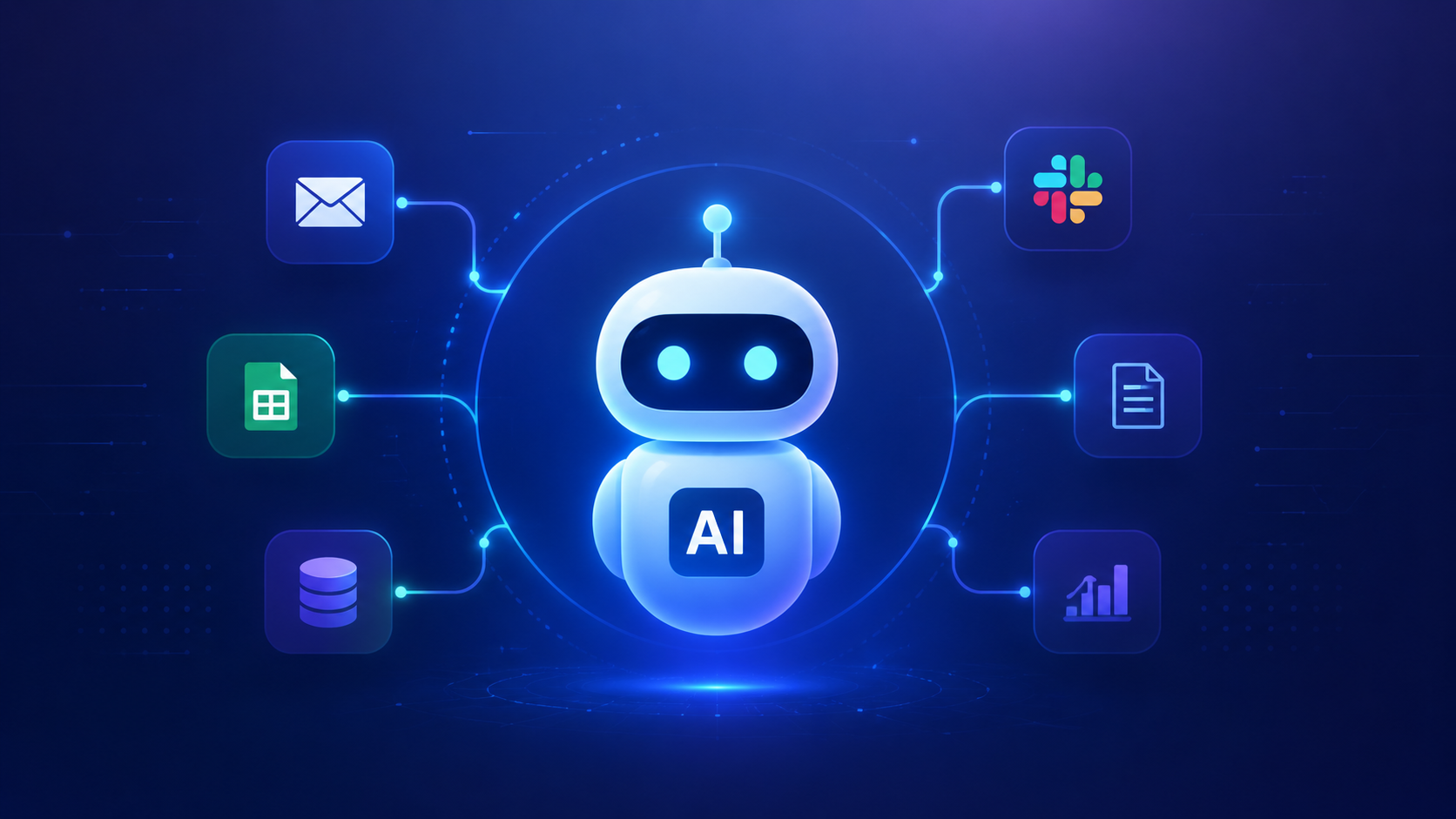
Agentic AI is the shift from AI that talks to AI that acts. Instead of only answering questions in a chat window, an AI agent can plan a task, use tools, move data between your systems, and complete work from start to finish — often with little human involvement. For Malaysian businesses, this is the difference between an interesting demo and a workforce multiplier. This guide explains what agentic AI is, how it differs from a chatbot, real use cases in Malaysia, and how to start.
What is agentic AI?
Agentic AI refers to AI systems that can act autonomously to achieve a goal. Give an AI agent an objective — “process this invoice”, “qualify this lead”, “generate the weekly report” — and it works out the steps, uses the tools it needs, and carries the task through, checking its own progress along the way.
The word “agentic” comes from agency: the ability to take action. That is the key difference. Traditional AI waits for your next prompt. An AI agent keeps going until the job is done.
In one line: A chatbot answers. An AI agent acts — it plans, uses tools, and completes multi-step tasks on its own.
AI agents vs chatbots: what’s the difference?
| Chatbot (e.g. basic ChatGPT) | AI Agent (agentic AI) | |
|---|---|---|
| What it does | Responds to prompts | Takes actions to reach a goal |
| Steps | One reply at a time | Plans and runs multiple steps |
| Tools & systems | Usually none | Connects to email, apps, databases |
| Human input | Needed at every turn | Minimal — runs on its own |
| Example | “Write me an email” | “Read this enquiry, log it, and send the reply” |
How do AI agents actually work?
Most agentic systems follow a loop:
- Goal — the agent is given an objective and any rules.
- Plan — it breaks the goal into steps.
- Act — it uses tools (email, apps, spreadsheets, databases) to do each step.
- Check — it reviews results and corrects course if something is off.
- Finish — it completes the task and reports back.
In practice, businesses build these workflows with orchestration tools. n8n is one of the most popular, because it lets teams connect apps and design multi-step agent workflows with minimal coding — which is exactly why it’s central to how many Malaysian companies deploy AI agents today.
How Malaysian businesses use AI agents
Agentic AI isn’t theoretical here — it’s already running in Malaysian operations. Common, high-value use cases:
- Customer enquiries — an agent reads incoming messages, answers routine questions, and escalates the rest to a human.
- Invoice & document processing — extracting data from PDFs and entering it into accounting systems automatically.
- Lead follow-up — qualifying new leads and sending timely, personalised follow-ups without manual chasing.
- Reporting — pulling numbers from different systems and generating a ready-to-read report on schedule.
- Data entry between systems — moving information between CRM, spreadsheets, and internal tools that don’t natively talk to each other.
The pattern is consistent: agentic AI removes the repetitive, rules-based work that eats staff hours — freeing people for judgement, relationships, and growth.
The opportunity for Malaysian SMEs: you don’t need a big engineering team. With the right tools and training, a small team can deploy agents that do the work of several full-time roles — often within days.
Why agentic AI matters now
AI has moved fast from novelty to necessity. Businesses that only use AI as a chatbot capture a fraction of its value. The real gains come from agents that do the work — and the companies deploying them now are building an operating-cost and speed advantage over those still doing everything by hand. In a competitive market, that gap compounds quickly.
How to get started with AI agents in Malaysia
You can experiment with off-the-shelf tools, but most teams get stuck turning a demo into something reliable enough to trust in production. Structured training closes that gap fast. LEAD’s AI Agentic Automation Certification is a hands-on, 2-day programme in Kuala Lumpur that teaches you to design and deploy autonomous AI agent workflows using n8n, multi-agent design, and RAG integration — ending with real, working deployments, not slides.
Because LEAD is registered with HRD Corp, the programme is HRDC-claimable: eligible Malaysian employers can cover 100% of the fee through their training levy.
Build AI agents that do the work. LEAD’s 2-day AI Agentic Automation Certification · n8n · HRDC-claimable · Kuala Lumpur. → Explore the Certification
Frequently asked questions
What is agentic AI in simple terms?
Agentic AI is AI that can take actions on its own to complete a goal, not just answer questions. Instead of only replying in a chat, an AI agent can plan steps, use tools, move data between systems, and finish a task end to end with little human input.
What is the difference between AI agents and chatbots like ChatGPT?
A chatbot responds to what you ask. An AI agent acts — it decides what to do next, calls other tools and systems, and carries out a multi-step task such as reading an email, updating a spreadsheet, and sending a reply — without you doing each step.
How are Malaysian businesses using AI agents?
They automate customer enquiries, invoice and document processing, lead follow-up, report generation, and data entry between systems. Tools like n8n let teams build these workflows without heavy coding.
Where can I learn to build AI agents in Malaysia?
LEAD runs a 2-day AI Agentic Automation Certification in Kuala Lumpur that teaches you to build autonomous AI agent workflows using n8n and real deployment. It is HRDC-claimable for eligible Malaysian employers.
The bottom line
Agentic AI is the practical next step beyond chatbots: AI that plans and acts to finish real work. Malaysian businesses are already using AI agents to cut repetitive workload and move faster than competitors. The barrier isn’t the technology anymore — it’s knowing how to build and deploy it reliably. That’s a skill, and it’s learnable.
See LEAD’s AI Agentic Automation Certification →
0 Comments